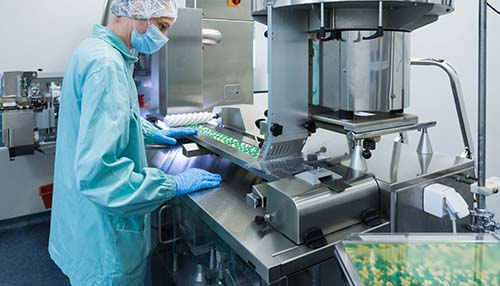

A good medicine does not begin in a factory. It begins as an idea, a market gap or a doctor’s request. A trusted pharmaceutical formulation company turns that idea into a stable, safe and consistent product that can be made at scale and sold with confidence. Many launches fail because this early work was rushed, not because the idea was weak.
This guide is for pharma entrepreneurs, product managers, marketers and business owners. It walks through each stage of formulation development in India, from the first concept to the first commercial batch. It also explains what to ask a partner before you commit.
What Is Pharmaceutical Formulation Development?
Pharmaceutical formulation development is the process of combining an active ingredient with suitable excipients to create a finished dosage form, such as a tablet, capsule, syrup, injection or ointment. The goal is a product that is safe, effective, stable and easy for patients to use.
A formulation team must answer practical questions. Will the drug dissolve properly? Will it stay stable for its full shelf life? Can it be made the same way every time? Does the taste, size or packing suit the patient?
A pharmaceutical formulation company handles these questions through research, lab work and testing. It then hands a proven formula and process to a manufacturing site.
Why Formulation Quality Decides Your Brand’s Future
Doctors and chemists judge a brand by how its products perform. A tablet that breaks, a syrup that separates or a capsule that fails a dissolution test will damage trust quickly. Fixing these problems after launch costs far more than doing the work properly at the start.
Strong formulation work gives you three things:
- Consistent quality from one batch to the next
- Fewer complaints, returns and regulatory problems
- A product story you can explain honestly to doctors
If you plan to build your own brand, formulation is the base on which everything else rests.
The Stages of Formulation Development in India
Most projects follow the same broad path. The details change with the product, but the logic stays the same.
Stage 1: Concept and Market Assessment
Every project starts with a clear question: why does this product need to exist? Study the therapy area, the existing brands, the strengths and combinations already on the market and the price range doctors accept.
Check whether your idea is a generic formulation, a new combination or a new delivery form. This decides the regulatory route, the timeline and the budget. A generic product of an approved drug follows a simpler path than a new fixed-dose combination.
Stage 2: Pre-Formulation Studies
Before any product is made, scientists study the active ingredient itself. They look at solubility, particle size, melting point, moisture sensitivity and how the ingredient reacts with other substances.
This step tells the team which excipients are safe to use and which will cause trouble. Skipping it is one of the most common causes of stability failures later.
Stage 3: Formulation Design and Prototype Batches
Next, the team designs the formula and makes small lab batches. They test different excipient mixes, binders, coatings and processes. The aim is to find a formula that performs well and is also practical to make on regular plant equipment.
At this stage the team also decides the dosage form details, such as tablet size, coating type, flavour for liquids and release profile.
Stage 4: Analytical Method Development and Validation
You cannot prove quality without reliable tests. Analysts develop methods to measure the strength of the active ingredient, related impurities, dissolution and other key properties. These methods are then validated to show that they are accurate, precise and repeatable.
Good analytical work protects you later, because every batch release and stability result depends on it.
Stage 5: Stability Studies
Stability studies show how a product behaves over time under set temperature and humidity conditions. They follow ICH guidelines, with conditions chosen to suit the climate where the product will be sold. These results support the shelf life printed on your pack.
Ask who owns the stability data and how it is shared with you. You will need it for regulatory questions and for buyers who ask for proof.
Stage 6: Scale-Up and Process Validation
A formula that works in a small lab batch may behave differently in a large machine. Scale-up moves the process to pilot and then commercial size. The team adjusts mixing times, compression force, drying conditions and other settings.
Process validation then confirms that the process delivers the same quality in repeated batches. Regulators and serious buyers expect this evidence.
Stage 7: Regulatory Approval and Licensing
The regulatory path depends on the product. In India, new drugs and certain new combinations need approval under the New Drugs and Clinical Trials Rules, 2019, through CDSCO. Many established formulations are approved at state level through the State Licensing Authority, which grants the manufacturing licence for the product and dosage form.
Rules and forms change over time. Always confirm current requirements with the regulator or a qualified regulatory consultant before you file.
Stage 8: Packaging, Labelling and Commercial Launch
Packaging protects the product and carries the legal information. The team selects suitable materials, such as blisters, bottles or sachets, and tests them for compatibility. Labels must carry statutory details like composition, batch number, dates and storage conditions.
Once the first commercial batches pass quality checks, you can move to distribution and doctor promotion.
What a Reliable Formulation Partner Should Offer
Not every business that offers formulation help has real capability. Look for these signs when you compare options.
In-House R&D and Analytical Support
A serious partner has trained scientists, validated methods and calibrated instruments. Ask to see the team’s qualifications and a sample development report. If everything is outsourced and no one can explain the data, be careful.
Compliant Manufacturing Linked to the Formula
A formula is only useful if it can be made properly. A strong pharmaceutical manufacturing company will follow Schedule M of the Drugs and Cosmetics Rules, keep complete batch records and run proper quality control. Many also hold WHO-GMP certification, which helps if you plan to supply institutions or export.
Transparent Documents and Data
You should receive development reports, specifications, certificates of analysis and stability data in clear form. Companies that hide documents or give vague answers rarely improve after the contract is signed.
Clear Commercial Terms
Ask for written minimum order quantities, pricing, lead times and confidentiality terms. Make sure your formula and brand details stay protected.
Formulation Partner, Manufacturer or Both?
New entrants often mix up the different types of companies they meet. Here is how they differ.
A pharmaceutical products manufacturer produces finished medicines in a licensed plant. It may or may not develop formulas itself.
A healthcare products manufacturer can make a wider range of items, such as nutritional supplements, personal care products and wellness products, along with medicines.
A formulation-led company does the research and development, then connects it with production. The best partners combine both, so the formula and the factory are managed under one quality system.
If you are choosing the broader business model, it also helps to know the PCD route. A PCD Pharma Company gives you exclusive rights to promote and distribute its existing products in a territory. This needs less investment and starts faster. Developing your own formulations through a partner gives you more control and brand ownership, but it needs more time and planning. Many entrepreneurs start with PCD and move into their own range once they understand the market.
Choosing a Pharmaceutical Company in India for Formulation Work
India has a large and well-established industry, so choice is wide and quality varies. When you review a Pharmaceutical company in India, use this checklist:
- Ask for a valid manufacturing licence that covers your dosage form.
- Check current GMP or WHO-GMP certification and the site it applies to.
- Request a sample development report and certificate of analysis.
- Visit the facility, or take a detailed virtual tour if travel is hard.
- Review stability and validation practices.
- Read the agreement for responsibilities, confidentiality and exit terms.
- Start with a trial batch before placing large orders.
This process takes time, but it protects your money and your brand.
Common Formulation Mistakes to Avoid
Some errors appear again and again in new projects. Watch for these:
- Copying a competitor’s formula without checking stability or quality
- Choosing a partner mainly because the price is lowest
- Skipping pre-formulation and stability work to save time
- Ignoring packaging compatibility
- Launching before analytical methods are validated
- Making claims that your data cannot support
Each of these can lead to batch failures, returns or lost doctor trust.
How Marketers and Product Managers Can Work Better With Formulation Teams
Formulation is not only a science task. Commercial teams add value when they share clear inputs early. Tell the development team about the target patient group, the preferred pack size, the price band, the expected volumes and the doctors you plan to approach.
Ask for product details in plain language, such as why an excipient was chosen or why a coating was added. This helps you explain the product honestly to doctors and avoid claims that go beyond the data. Follow the Uniform Code for Pharmaceutical Marketing Practices (UCPMP) when you promote.
Find the Right Partner for Your Next Product
If you are comparing partners, take time to read about each company’s background and quality approach. At Human Discovery, you can learn more about our work on the about us page before you take the conversation forward.
Conclusion
A strong product is built in the lab long before it reaches a chemist’s shelf. Work with a pharmaceutical formulation company that can show real research capability, compliant manufacturing, honest documents and clear contract terms. Take each stage seriously, from concept and pre-formulation to stability, scale-up and packaging, and validate everything with a trial batch before you scale.
Ready to discuss your product idea? Contact us to share your requirements, timelines and quality expectations.
Frequently Asked Questions
It designs, tests and optimises the formula of a medicine so that it is safe, stable and consistent. The work includes pre-formulation studies, prototype batches, analytical testing, stability studies and scale-up support.
It depends on the dosage form, the complexity and the approvals needed. A simple generic tablet usually takes less time than a new combination or a modified-release product. Ask for a written timeline for each stage instead of one general promise.
A formulation company focuses on research and development of the formula. A manufacturer produces the finished product in a licensed plant. Many good partners do both, which keeps the formula and the production process aligned.
Yes. New drugs and certain new combinations need CDSCO approval, while many established formulations need a state manufacturing licence for that product. Requirements change, so confirm the current rules with the regulator or a qualified regulatory consultant.
They show how long a product stays safe and effective under defined storage conditions. The results support the shelf life on the label and help you answer questions from regulators and buyers.
Yes. Many startups work with an experienced partner instead of building a lab and plant. Begin with a small number of products, test a trial batch and expand once quality and demand are clear.